

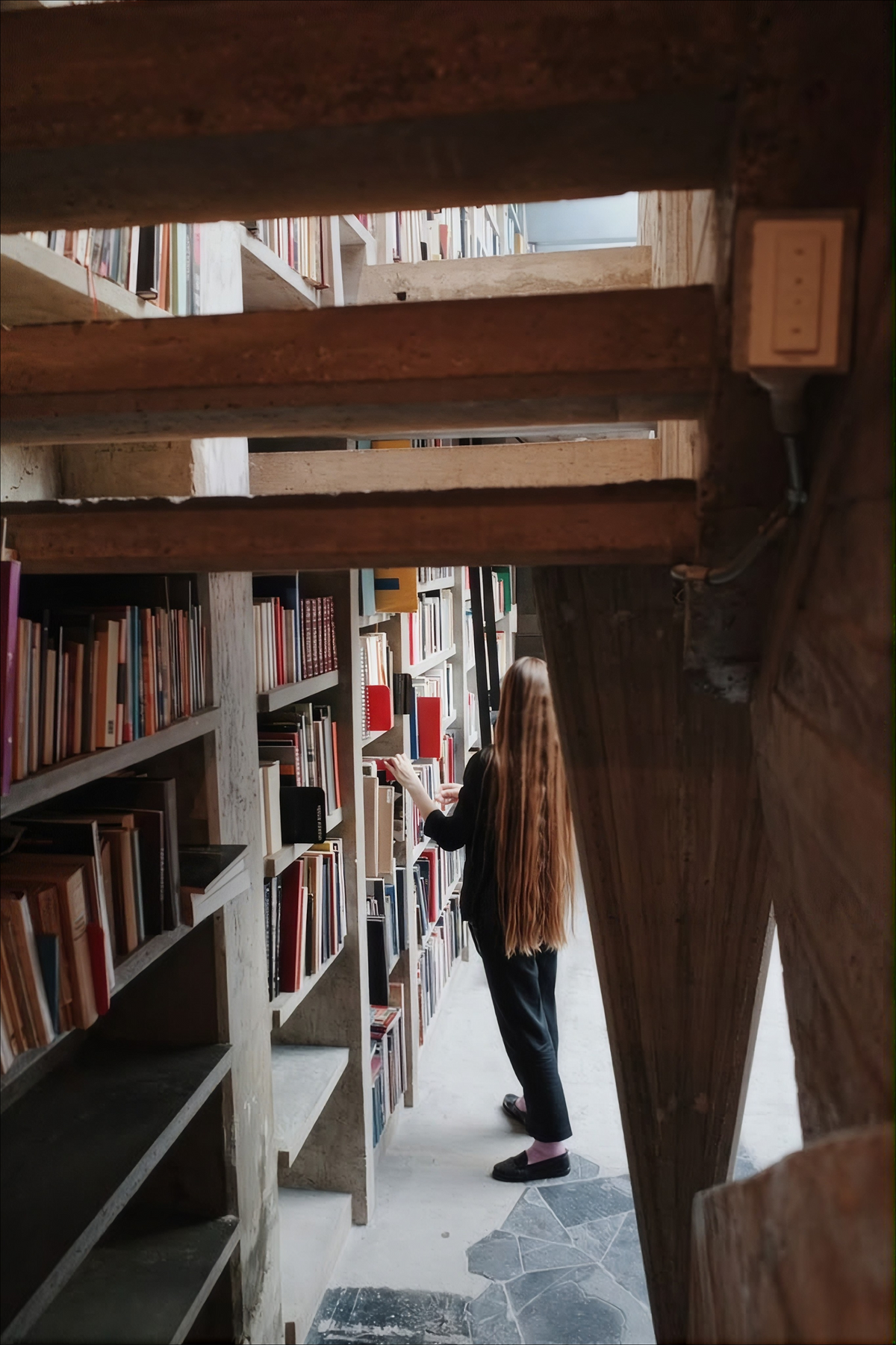
Objects of Interest is a new series about the things people keep: what they hunt for, haul home, and make room for. In each installment, we put the same questions to someone whose eye we trust and let the answers go where they will.
We begin with Laura Regensdorf, a writer who has covered beauty, dance, and design for Vogue and T. For more than a decade, her apartment searches have been shaped by a seven-foot wallpaper panel printed in a 19th-century French factory. Her answers travel from the coquina shells of Sanibel Island to a red Italian tape dispenser, Ray Johnson's mail art, and a sunset under James Turrell's open ceiling at PS1, with a few pieces from the shop along the way.
What’s an object you’ve lived with for a long time, and what’s the story behind it?
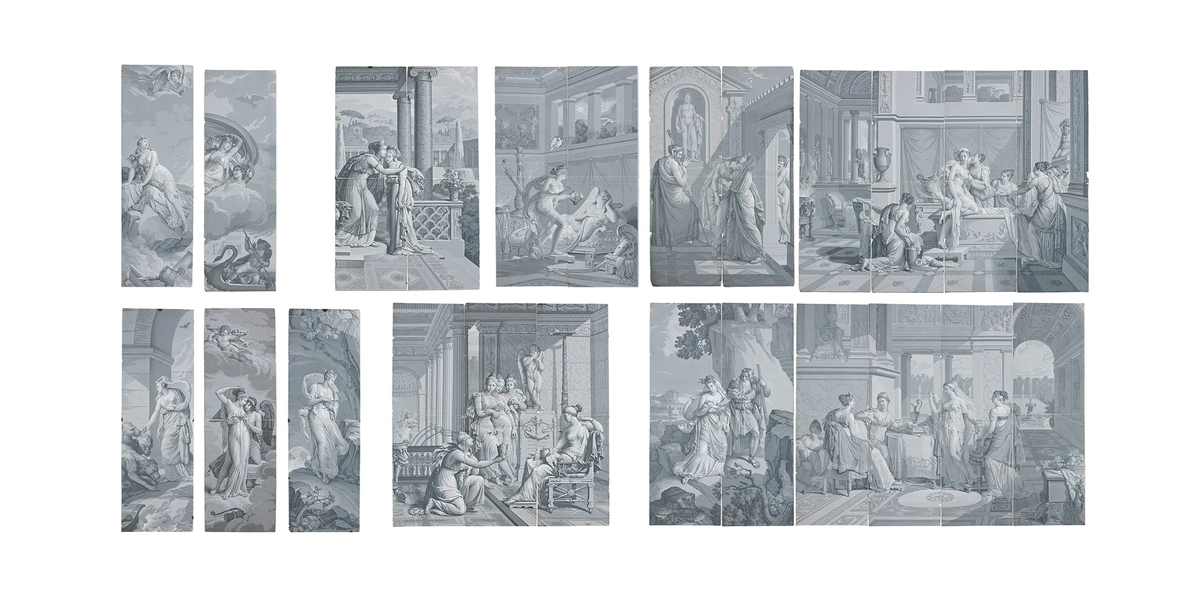
Around 2013 my then-boyfriend and I came across this enormous grisaille wallpaper panel at the Chelsea flea, back when the market took place inside a multilevel parking garage on the weekends. It was propped against the brick wall—nearly seven feet across in a slim painted-wood frame, noticeably worn in several places—but somehow it had escaped people’s notice. As soon as we said we’d buy it, a couple of interior designers flocked over, trying to outbid us, but the dealer was a principled guy. We rented a box truck and took it back to Brooklyn.
It’s an incredible piece—part of a panoramic series on the story of Psyche, originally produced by the Dufour factory in the 1810s. (A laborious undertaking involving 1,245 wood blocks, it earned a silver medal at the 1817 Exhibition of French Industrial Products.) My scene, which shows Psyche stepping into a bathtub alongside her attendants as Cupid gazes on from a nearby column, seems to be from an 1872 reprint, according to the Musée des Arts Décoratifs, which has the full suite. I admit, logical or not, it’s been a determining factor in apartment searches, due to its size. My last move was from two blocks away, close enough to hand-carry, and it just barely fit up the stairs.
Tell us about the first thing you remember collecting, intentionally or not.
I grew up in Fort Lauderdale, Florida, and we used to go with a group of families to Sanibel Island, on the Gulf side, every Memorial Day. The tiny saltwater coquina clams—I just called them “clammies”—were probably the first things I consciously collected. They’d burrow in the sand along the shoreline, and my best friend and I would scoop them into a bucket of water: a makeshift aquarium that we’d later dump back out. But the washed-up shells were the keepers. The two halves fell open like fragile butterflies in shades of saffron, pink, and dusty purple. Beachcombing lights up the same part of the brain as a flea market—you’re evaluating shape and color in real time, snatching at something underwater before a wave rolls in—only without the commercial constraints. There’s a take-it-or-leave-it freedom, and the only consideration is beauty.
What do you find yourself drawn to again and again, whether a material, a color, a shape, or an era?
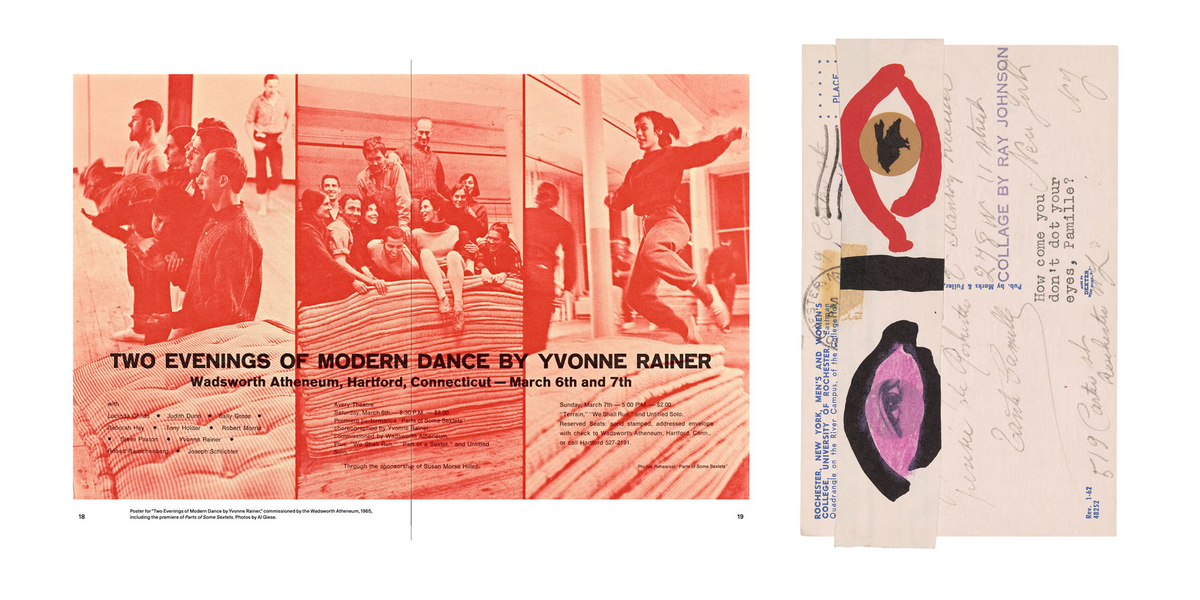
I love borderline utilitarian objects in sterling silver: a hinged box shaped like an oyster, a William Spratling ashtray that resembles a clownish penguin, a tiny funnel sized for a perfume locket. When my dog Pina lost her puppy teeth, I put them in a vintage pill box shaped like a piece of hard candy—as if there were the faint echo of a children’s dentist warning not to eat too many sweets. Objects in precious materials solidly hold their worth, but I’m also into things that have been miraculously diverted from the scrap bin of history, whether xeroxed flyers from the Judson Dance Theater era, a piece of Ray Johnson mail art (“OH! NO!” in fat black ink), or short-lived 1970s art magazines. I’m interested in the stories baked into the objects, how their past lives connect to the present.
Is there an object you regret letting go of, or one that got away?
Earlier this year, I was walking through AIPAD, the photography fair, at the same time as this online auction of outsider art. I remember standing in the corner of one booth, discreetly bidding on this drawing called Linoleum Lady, by Julia Schmidt Healy: a silhouette of a woman against a contrasting background, both seemingly cut from cheap floor tiles. I momentarily hesitated out of practicality and because it seemed maybe strange to chase a faraway thing in the presence of so many treasures on the wall. But she was gone in a flash. The idea of an anonymous portrait in an outdated material, drawn by a woman whose name we don’t know—it all stays with me. I ended up walking out of the fair with a different lady: a small Carl Van Vechten photo of the actress Tallulah Bankhead, her lion cub Winston Churchill in her lap.
What’s something modest or everyday that you think is really well designed?
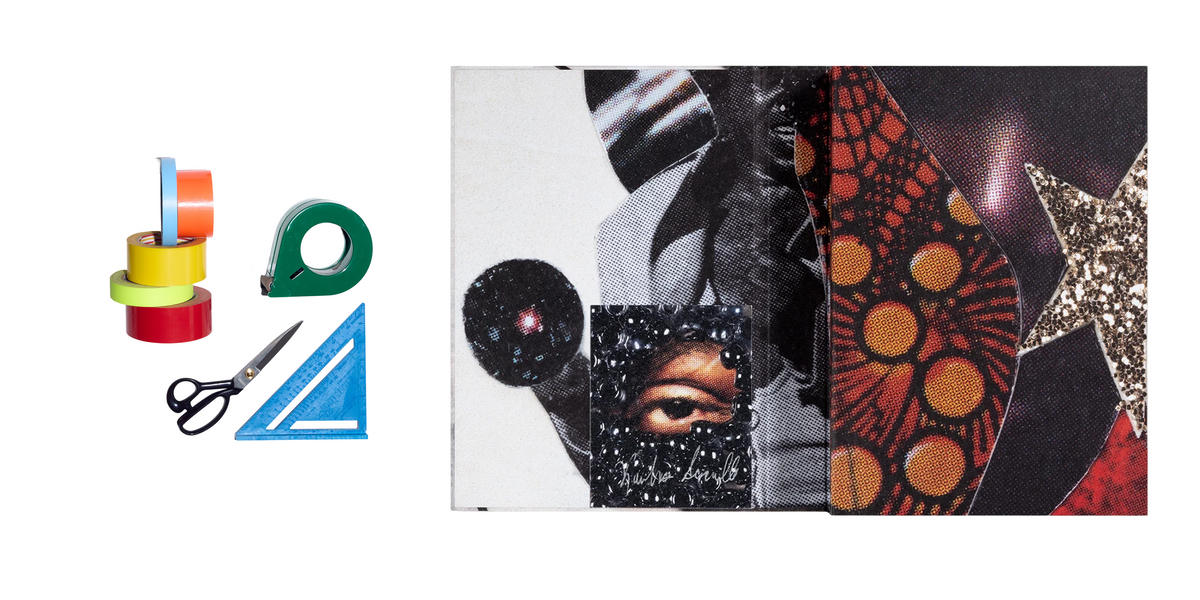
The red metal tape dispenser by Fratelli Mazzucchelli is a forever favorite. I first came across it years ago at Kiosk, whose former shop in Manhattan had an assortment of things you’d expect to find at international hardware and kitchen-supply stores. I finally bought mine off their website in 2021, and when it arrived before Christmas, I jokingly called it my leg lamp and put it on top of the tree like a star. To me, there’s no better union of form and function—so handsome to look at, so pleasing to hold. It’s shaped like a doughnut that juts out to a point; it splits open into two halves, which close around a roll of packing tape. I use it almost daily to bundle up cardboard boxes for recycling, and I’ve been tempted to get a spare. When I interviewed the set designer Stefan Beckman for T, he included a green version in his kit essentials; I spotted a beat-up red version on a work table at Passementerie Verriere in Paris. It’s the best.
What’s on your desk right now?
A Peter Shire mug that I bought from Karma during lockdown—an odd mix of yellow, pea green, and purple that I questioned until putting it in conversation with wilted chive blossoms and a dirty sponge.
Samples of Bodha’s new eaux de parfums. The cofounder and perfumer Emily L’Ami, who grew up in New Zealand and now lives in Pasadena, has such a wry, poetic outlook on the world. Ahead of the launch, she invited me to a small-group Scent Club, in which everyone smells the same raw materials and talks about the associations that bubble up. For that session she’d chosen plants with different adaptive qualities for survival—a resonant theme in our sometimes upside-down world—but I’d had a cold that day and thus a bum nose. I’ve been dipping back into her trio (Air, Plants, Earth) periodically since.
An Isaac Reina laptop case that has outlasted a few computers (and the brand itself). It’s more of an open envelope, really, in vegetable-tanned leather that’s worn to a tawny brown. I had a cobbler replace the elastic straps that wrap around the corners. I like things that carry the mark of time.
Is there a piece you saved for, waited on, or searched for a long time?
I had a vintage Knoll two-seater in the living room for years—it served me well in different contexts. Then I spontaneously fostered and, two days later, adopted a puppy in 2023. Pina was (and is) such a good girl, and I, new to dog ownership, got lax with crate training. Early one morning while I was still asleep, she wound up aimlessly gnawing on one of the arms. The woven wool fabric was a problem anyhow—an impossible magnet for her short, pine-needly hairs. I spent quite a while looking for a longer black leather sofa and ended up circling back to a vintage Knoll three-seater. It’s a bit weathered with good bones, which makes a fitting companion to the Psyche wallpaper.
What are you reading, looking at, or listening to lately?
I had a nice double feature of sculpture last week. First, the sprawling Brancusi exhibition at MoMA, which includes so many of his studio photographs, along with Man Ray footage and charming party caps Brancusi made for friends—proof that the artist was not only prolific but also ruggedly handsome and fun. Then, the opening of Karma’s Tribeca space, with a show of the late Thaddeus Mosley’s works from the 1950s and ’60s: hand-carved wood totems alongside unexpected collages, fleshy and political and dense.
Earlier this month I picked up a copy of Luigi Ghirri’s Kodachrome (republished by MACK in 2012) from Yvon Lambert in Paris. I caught the 2019 Ghirri show at the Jeu de Paume—the sly humor threaded through his photographs left a big impression—so he’s in the back of my mind whenever I come to town. The Brooklyn-based artist Keisha Scarville just won the 2026 PhotoBook of the Year award for Passports. I spoke with her for T List back in June, and it’s such a rich body of work. Taking her Guyanese father’s teenage passport portrait as a starting point, she’s created hundreds of iterations that incorporate collage, overpainting, glitter, and found objects—interrogations of identity that feel hyperpersonal and cosmic.
Performance, especially dance, is what I see most: recently, the Pageant marathon at MoMA; Lincoln in the Bardo, bawdy and poignant, at the Met Opera; Alexa West’s Amusement, set on the Rockaway shoreline for the annual Beach Sessions Dance Series. The choreographer Pam Tanowitz, whose work metabolizes dance history in pristine and unexpected ways, created a quartet for the New York City Ballet principal dancer Adrian Danchig-Waring’s farewell performance, which I wrote about for Vogue.com. I’m excited to see another work of hers in Paul Taylor Dance Company’s fall season.
What's a space, real or imagined, that has stayed with you?
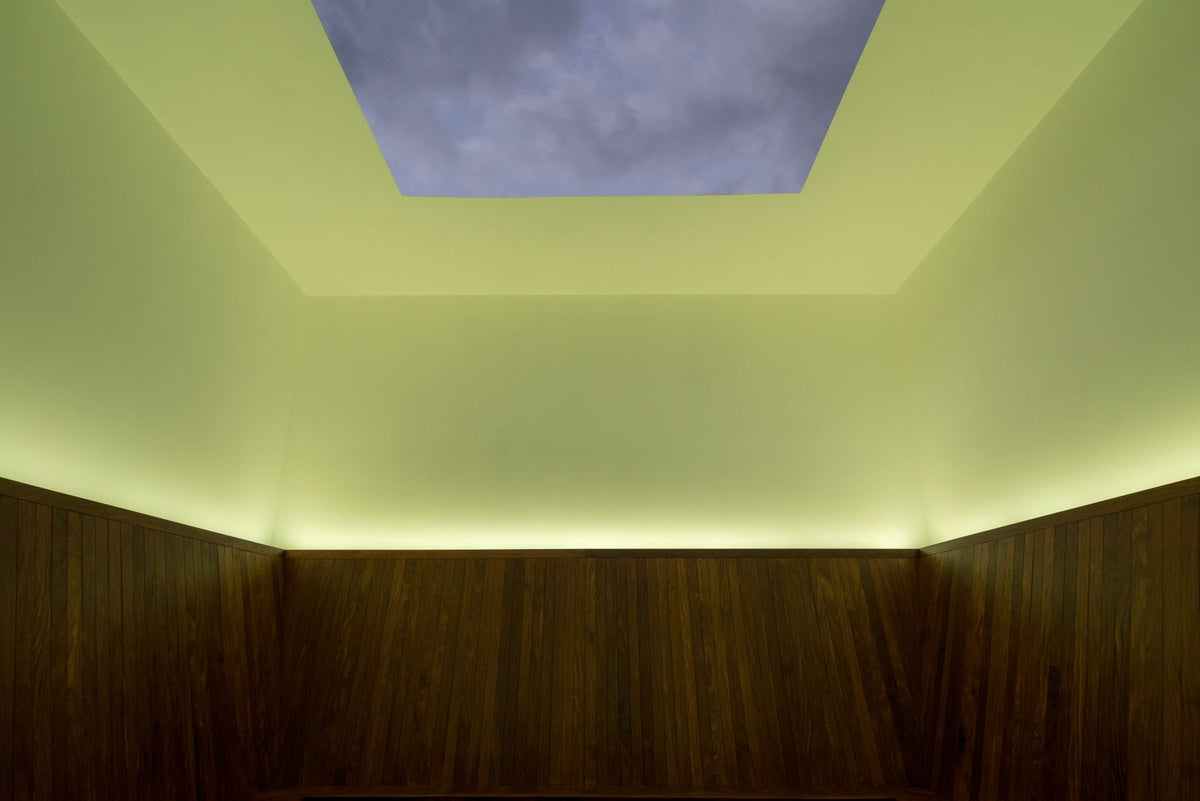
I’ve only made it to one sunset viewing of James Turrell’s Meeting, his installation at MoMA PS1 with an open portal to the sky, but I remember being so moved that I sat down to write—not for an assignment but to pin down my thoughts. At the time, I was the senior beauty editor at Vogue with a web vertical to fill, so I ended up framing it as an ode to New York’s under-the-radar meditation chapel; eight years later, with life exponentially more harried, the characterization is truer still. It felt so spacious, to have no other task but to stare at a cutout in the ceiling, observing shifting colors and clouds and errant airplanes. I’d read in a MoMA oral history that Turrell pitched a tent there after jackhammering through the roof. He had a funny way of putting it: “I lived outside inside PS1.”
What are a handful of objects from TPE that would feel at home in your space?
I am completely in love with Tekla’s poplin pajamas. I have black-and-white striped ones, and it’s time for a second set. The artist Sonia Delaunay made such vivid work—paintings, theater costumes, a patchwork blanket for her son’s crib that’s now in the collection of Paris’s Musée National d’Art Moderne—so I’m curious about this book, which delves into her crossover with industrial textiles and fashion. This tall, cylindrical vase by Victoria Morris is my favorite shape and scale for arranging flowers (I’m picturing blowsy dahlias or green sunflowers); this Italian silver one would be great with spiky thistle, as counterprogramming to the sensual curves. With its rounded corners, this Finnish pine stool would be friends with my bedroom dresser, a 1930s Marcel Breuer design for the Bryn Mawr dorms. I’m eyeing the Studio Augustin pillow made from a vintage grain sack; my living room is monochromatic, with just a few notes of red (a Lawrence Weiner poster, a Romolo Lanciani lamp), so this plaid would fit in—plus it seems lint-rollable with the inevitable dog hair. Speaking of Pina, she has this black-and-brown Baina bathmat as a seat cover on the sofa, but she could use a spare for laundry day; for my showers, I like a quick-dry waffle towel. And how beautiful is Siyi Zhang’s hand-thrown bowl? The glaze reminds me of Easter egg dyeing, the way the blue settles onto the shell in uneven ways. The result is always more expressive than you expected.